


Welcome, dear reader! Connecting with people is a Stoic concern—and it’s worth learning to do well. Your next friendship, business opportunity, or great love could begin with how you present yourself and how you make someone feel to leave a lasting impression. Today you’ll learn all of it.
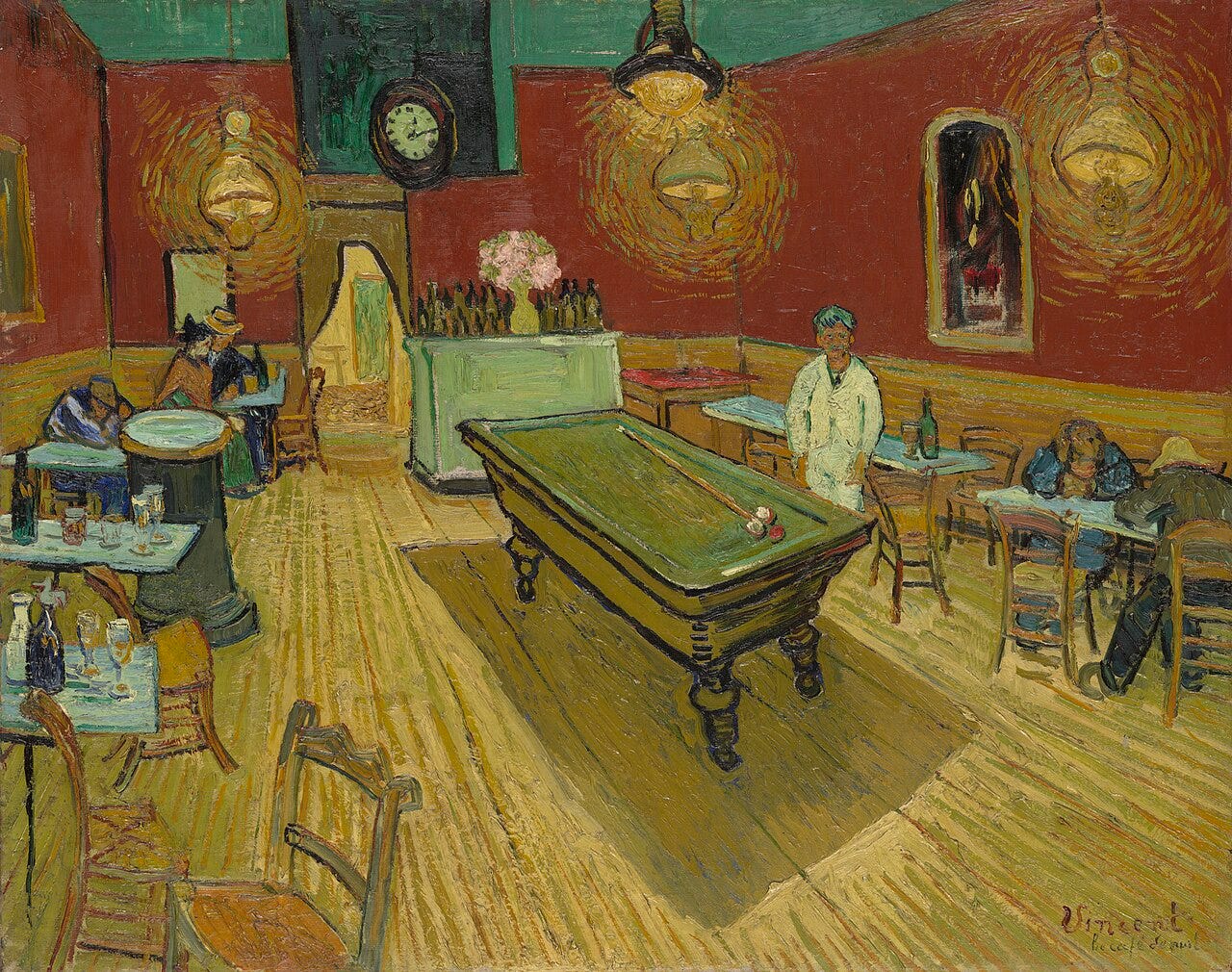
“Train yourself to pay careful attention to what is being said by another and as far as possible enter into his soul.” — Marcus Aurelius, Meditations 6.53
Michael Faraday was tired of bookbinding. He had little formal education and wanted a life in science, but his letter to Sir Joseph Banks, president of the Royal Society, received no answer.
He tried again. After attending Humphry Davy’s lectures, he prepared an illustrated volume of notes and sent it to the chemist, asking for help entering scientific work. Davy replied, recognized his enthusiasm and attention, and agreed to meet him. When a laboratory position became available in 1813, Faraday accepted it.
That’s how he become the great scientist we remember him for.
We face similar versions of that decision whenever someone interests us. A stranger might become a friend we cherish for years. A conversation between an artist and a psychologist might change the direction of a project. There’s an enormous amount we can learn from one another, loving connections we could have, provided someone is willing to be bold.
I used to worry that people would think I was weird for approaching them. Eventually, I asked myself what would happen if they did. It would hurt for a moment- for sure. But I could brush it off. I know myself, and I’m good with who I am.
That made the risk feel manageable. I could be excited about meeting someone without needing reassurance that they would like me.
Because you can walk over, say hello, and remain so busy wondering how you’re coming across that you barely hear the answer. Fear of rejection keeps drawing your attention back to yourself, precisely when another person has begun to let you into their world. And it’s good that you get rid of it.
become someone worth discovering
This is why the highest form of building a connection is asking questions.
When someone takes an interest in what I do or how I came to think a certain way, I feel especially drawn to them. They’ve noticed something they want to understand, and their curiosity makes me want to share it. I like them in an instant.
A person mentions changing careers. You wonder what finally made them take the risk. Their answer reminds you of a difficult decision of your own, and soon you’re discussing something that matters to both of you. Each answer gives the conversation somewhere sublime to go.
That kind of interest has worked for me in the hospital too. I’ve had patients remember the kindness I showed them. I connected with them beyond taking a history and discussing their condition. We laughed. What remained with them included the experience of being treated as someone whose life extended beyond that encounter.
Being remembered this way makes me conscious of how much an ordinary interaction can mean to the person receiving it. We rarely know everything someone is beyond their conciliatory exterior.
Attention also becomes more inviting when we let our enjoyment show. A specific compliment about someone’s taste, humour, or work tells them that something about them has affected us. And what could be better than that? Than being invincible? There’s pleasure in being appreciated and seen by someone who seems happy to be there.
I feel this around friends whose energy makes me excited to leave the house. They’re ambitious, they enjoy themselves, and they participate wholeheartedly in dancing, exercise, or ridiculous banter. Their willingness to face embarrassment while enjoying themselves makes it easier for everyone else to join in.
A reserved person can offer that same invitation through enthusiasm and responsiveness. The willingness to risk a little awkwardness gives other people permission to relax around you.
I’ve found it useful to remind myself that I like socializing. It helps me look forward to the person I might meet. And once I’m interested enough, I have less attention available for supervising every word that comes out of my mouth.
give them a real person
As the conversation develops, the other person needs the opportunity to discover you as well. Your opinions, tastes, and convictions give their curiosity something to work with. Constant agreement eventually leaves them wondering who they’re talking to. It’s rather boring.
In Charlotte Brontë’s Jane Eyre, Jane believes she is about to lose both her home and the man she loves. Rochester appears ready to marry another woman and send Jane away. Distressed, Jane tells him what separation would mean and insists on her equal humanity.
Rochester proposes. Once convinced he means it, she accepts. But when he later admits that he encouraged the other woman’s interest to provoke jealousy, Jane challenges him. What about that woman’s feelings?
Having gained the affection she wanted, she still remains willing to question the man offering it. We can see what she cares about because even her happiness doesn’t alter her innate convictions about how to treat a person.
That makes a person worth knowing. You begin to trust that their agreement means something, that their affection allows room for truth- all of which is genuine.
Of course, independence requires judgment. Someone who imposes every opinion, interrupts constantly, or expresses contempt for whole groups of people gives others good reasons to avoid another conversation. Honesty carries responsibilities to the person receiving it. Timing, tact, and the effort to understand them matter.
The impression deepens as people discover how reliably those qualities hold. Over time, they learn whether the person they enjoyed meeting is someone they can depend on.
on competence
My mentor, an orthopaedic surgeon, has left that kind of impression on me.
He gets up on time, reads, sees his patients, operates, and goes home to rest—or travels elsewhere to do more work. He’s excellent at what he does. And watching that consistency makes me examine my own habits, including the mornings I sleep in.
I want his level of mastery: to treat my work with care and keep improving until the quality is undeniable. His example continues to influence me long after I’ve left his company.
All this to tell you that competence has an emotional effect of its own. A client feels the relief of trusting someone who understands their problem. An employer knows a responsibility will be handled. A younger colleague begins to imagine what they could become.
Faraday’s introduction contained the beginnings of this. His attention and effort gave Davy reasons to take him seriously. The opportunity that followed gave him somewhere to develop those qualities further.
Yet even a thoughtful approach can go unanswered. Faraday’s letter to Banks already had.
In the opening of the Enchiridion, Epictetus places our judgments and choices within our power and reputation outside it. Other people have their own part in deciding what they think of us. Allowing them that freedom makes it easier to offer our interest without demanding a particular response.
I still don’t know where the next conversation will lead. Someone I haven’t met yet may give me a reason to remember the day. And I’d like to be available when that happens.
I hope the same for you too, . Have a great day ahead.
And if we’ve helped or touched you in a way, consider upgrading to a paid subscription. Or support our free essays, writing and research with a one-time donation of your choosing by clicking the button below. Be part of our great cause.
Other favorites,


Have a wonderful day ahead.
With love,
Antonius Veritas, M.D
I really enjoyed this perspective, particularly your observation that fear of rejection draws our attention back to ourselves. It’s interesting how quickly the mind can turn a simple conversation into a judgment about our own worth, often before we’re even aware it’s happening.
Your point about genuine curiosity is especially valuable. When we shift our attention from how we’re being perceived to understanding the person in front of us, the entire experience changes.
Français (Original) :
Serge : Kasper, nous sommes allés avec toi à l'hôpital, voir des soldats grièvement blessés. Ce sont des adultes. Et toi, tu étais assis près de leur lit à leur raconter des contes d'Aladin et d'Ali Baba. Comment dois-je comprendre cela ?
Kasper : Un conte n'a pas besoin de prouver qu'il est vrai. Un guerrier blessé a besoin d'avoir près de lui un père, une mère, et non un coach en pensée positive.
Serge : Mais l'Ordre professe l'éloignement de la compassion ?
Kasper : Ce n'est pas de la compassion. C'est de la fraternité. Les plaies d'un soldat ne se soignent pas par la compassion, mais par le sentiment que tu es malgré tout dans le rang.
English (Translation) :
Serge: Kasper, we went with you to the hospital to see severely wounded soldiers. They are grown adults. And yet, you sat by their beds telling them fairy tales about Aladdin and Ali Baba. How am I supposed to understand this?
Kasper: A fairy tale doesn’t need to prove it is true. A wounded warrior needs a father and a mother by his side, not a positive thinking coach.
Serge: But doesn't the Order preach detachment from compassion?
Kasper: This is not compassion. It is brotherhood. A soldier’s wounds are not healed by compassion, but by the feeling that you are still in the ranks.