


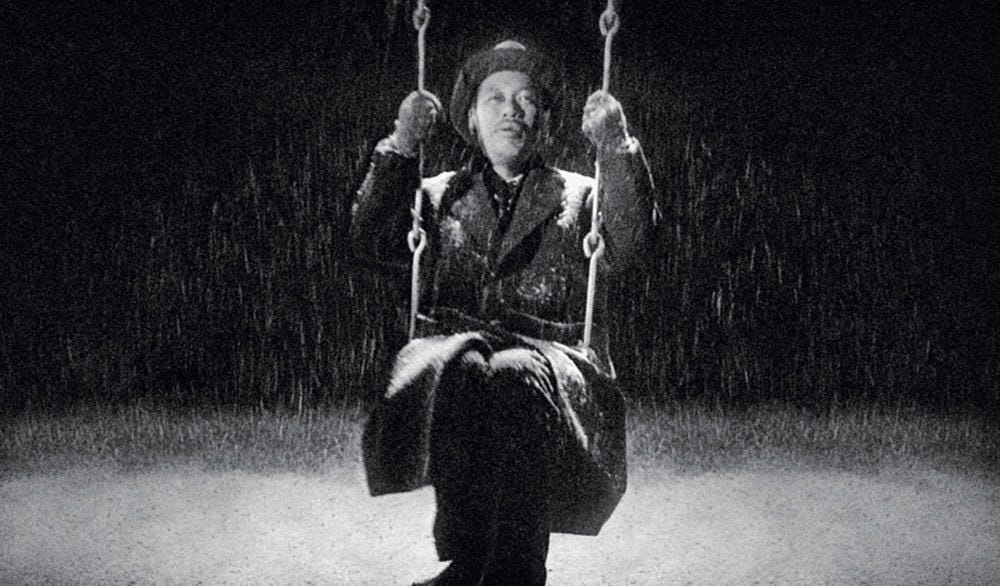
“Begin at once to live, and count each separate day as a separate life.”- Seneca, Letters
Kanji Watanabe discovers he has stomach cancer.
The poor guy has spent the last 30 years numbing himself with soul-crushing paper work after his wife died and now with a few months left to live, he reflects on the measure of his life and wonders if he ever did anything worthwhile.
He tries to speak to his son about this tragic fate but he gets short of words. How do you explain to someone you love that you’re dying? That they’ll be an orphan? So he retreats to his room, locks the door behind him and still in his suit- covers his head and weeps.
Soon, he gets a bit out of his head and decides to live out his foregone pleasures.
Akira Kurosawa, author of the novel Ikiru, takes our character through Tokyo’s nightlife full of drinks, women, drugs and other forms of entertainment. Imagine the relief and fun he’s having. However, he requests the pianist to play an old love song and while singing along he starts crying. Everybody now stops to listen. What was supposed to be an exciting night brings a cloud of grief to the club.
Sad isn’t it? Watanabe is now lost- he doesn’t know what to do with himself now that his form of escapism doesn’t resolve his problems.
Then he pursues a former colleague, Toyo, a young woman whose enjoyment of and aliveness in life fascinates him. He has to sign her resignation form. But she grows uncomfortable that he wants to hang around her. Thinks he’s creepy. But later he explains it’s that he’s about to die and wants to feel as alive, as full of life as she is.
It’s crazy how after all these years he hasn’t learned how to live.
Toyo is a simple woman. She just makes toy rabbits for children and finds fulfillment in the connection this job gives her with the kids who receive them. Watanabe sees a similar possibility within his job- there’s a petition that’s been going around in his department where mothers want a polluted drainage area to turn into a playground.
He decides to take up this responsibility himself.
It’s a struggle. Fighting through the bureaucracy to get this done takes more effort and determination than he thought. He has to become fearless and aggressive- traits he didn’t have before- while standing up to local officials and members of the Yakuza gang, to the point he even smiles when they threaten to kill him.
This is where he notices he’s now truly alive. He has nothing to lose. He persists and gets the playground built. And now near his death, he sits on a swing beneath a cloud with falling snow and sings his old favorite song again. This time with great contentment.
What Makes a Life Complete?
Seneca compares life to a play and us- the actors.
In letter 77, he says that it doesn’t matter how long a play lasts, but how well you perform it. If you dare to live well, to be a good and honorable person- acting with courage, discipline, focusing on what you control and treating others with kindness, generosity and loving wholeheartedly- you’ll have lived a whole life no matter when it ends. Cool right?
This then even removes the fear of death because if all you have to do to feel good about your existence here is spend more time with the people you adore, finish the work you set out to do and be compassionate with the different parts of yourself, then life’s good.
Of course, you don’t have to dismiss the elephants in the room- the duties that still need your care and attention. Only that if you do your work with good intention and all your attention- you’re already doing well as far as the satisfaction of your life is concerned. You don’t have to reach a specific quota so you can feel fulfilled because as you know by now- as long as you’re alive there will always be problems to solve and we have to make peace with this fact so that we create time for the things that make our lives feel worthwhile.
Watanabe gives you something to think about- what good can you do with the power, knowledge, resources, time and authority you have at this moment? What can you leave better than you found?
The Cost
It won’t be easy. You’ll experience pain and meet the proverbial crossroad of sacrifices when you set out to make your life worthwhile.
Apologizing to make amends with someone or clear your conscious will make your reputation and tough exterior questionable. Perhaps you’re not as perfect as you think. Your progress at work may suffer when you set out to spend more time with your family. Setting out to write or sing or paint will expose the distance between your taste and your abilities. Maybe you’ll even discover how much you love sleep and how much it takes to live your dream.
And that’s why I want you to ask yourself today, What discomfort am I avoiding by leaving this undone? And how can I make it easy to manage because the life I want is worthwhile. The more specific your answer, the more it’ll move you into action.
But if this doesn’t work, you can ask yourself a more severe question- What would have to become painful enough before you finally acted? Why require that much pain?
It took my sister getting cancer to have the idea of mortality so intimate with me and the vision for my life ever so profound. It took my young friend dying in a tragic car accident to be grateful for the opportunity to live and do cool stuff. It took a fairly healthy patient’s condition turning for the worst in an instant to know death breaths right near me. And not that I wouldn’t have come to the realizations on my own. But life did show me it has no favorites and it did make it clear that I need to take my life upon myself and choose the direction I want it to go before the lights go out.
I wish the same for you, dear . I want you to fight for your playground, and find happiness in bringing it to fruition- as Watanabe did.
Thanks for reading this far. Consider upgrading to a paid subscription. Or support our free essays, writing and research with a one-time donation of your choosing by clicking the button below. Be part of our great cause.
Have a wonderful day ahead.
With love,
Antonius Veritas, M.D.
Coincidentally, I was reading Lucius Seneca Letters from a Stoic on the plane two days ago, and one of the letters I read was Epistle LXXVII Against the Fear of Death. I underlined the last two sentences of the letter, which you also quoted, “Life is like a play upon the stage, it signifies not how long it lasts but how well it is acted. Die when or where you will, think only on making a good and decent exit.” Like most Stoic advice, easy to say, difficult to do. Thank you for another outstanding article.
The stories shared about mortality and loss are deeply moving. They serve as a reminder that life is precious and that we should take control of our paths before it’s too late.