The Dark Side of Pleasure
"Don’t be overcome by its comfort, pleasantness, and allure." - Epictetus
“Whenever you get an impression of some pleasure, as with any impression, guard yourself from being carried away by it, let it await your action, give yourself a pause. After that, bring to mind both times, first when you have enjoyed the pleasure and later when you will regret it and hate yourself. Then compare to those the joy and satisfaction you’d feel for abstaining altogether. However, if a seemingly appropriate time arises to act on it, don’t be overcome by its comfort, pleasantness, and allure—but against all of this, how much better the consciousness of conquering it.” - Epictetus
I learned this lesson from nauseating repetition.
I learned it from the blue light of a phone screen at 2:00 AM, eyes dry, thumb scrolling through an infinite feed, hunting for a dopamine hit that never actually came. I learned it from greasy cardboard takeout boxes because cooking felt like a war I couldn’t win. I learned it from the particular, hollow ache of waking up beside someone I didn’t love, simply because being wanted felt like a temporary antidote to loneliness. I learned it from the hangovers that felt like I was having an aneurysm.
None of this felt reckless in the moment. In fact, it felt like self-care. It felt like finally breathing. But I was mistaking the anesthetic for the cure.
The ancient Greeks had a perfect image for this- the leaky jar. Plato described it in the Gorgias- a soul governed by appetite is like a perforated vessel. You can pour an ocean of wine, validation, pleasure, or distraction into it, but because there’s no self-control to seal the bottom, you remain perpetually, desperately empty. I didn’t know I was living inside that jar. I just knew I was thirsty.
And the crazy thing about it is that there’s no cinematic rock bottom. It’s all a slow-motion car crash stretched across months. Choices really do have consequences. They appear in mornings that feel like waking up underwater- limbs heavy, thoughts sluggish, the day already exhausting before you’ve left bed. They show up in a brain so fried by cheap dopamine that you can’t finish a single page of a book you once would have devoured. You see it in the creative projects that sit in the corner, gathering dust, judging you. Perhaps you keep asking, Why do I feel so tired and unmotivated all the time? Until you do some introspection. You see that you’ve been buying relief on credit, and the interest rate is predatory. Every scroll, every distraction, every shortcut compounds. In Wilde’s The Picture of Dorian Gray, the protagonist stays beautiful while his portrait- hidden in the attic- rots with every hedonic indulgence. We do the modern equivalent. We look fine on the outside, but in the attic of our minds, our attention span is withering. Our life force is dwindling. Our soul- restless.
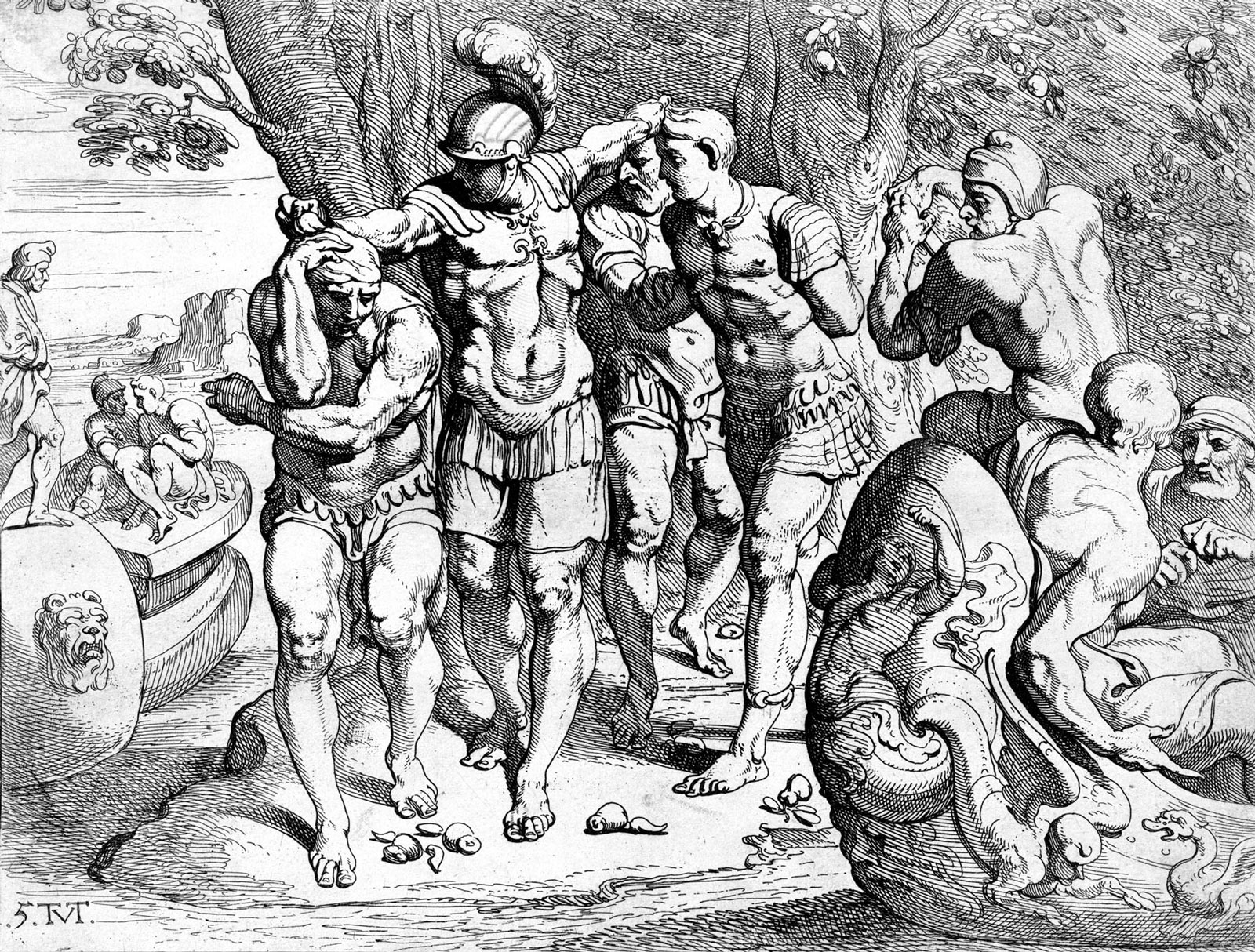
It’s wise to understand that we don’t chase pleasure because we’re wicked. We pursue it because we’re tired. In Homer’s Odyssey, the Lotus Eaters didn’t consume the narcotic flower out of malice- they ate it to forget the pain of the journey back home. Pleasure is the great softener. There is nothing inherently wrong with wanting ease. The problem begins when pleasure becomes your first responder. When stress hits and your hand automatically reaches for the phone, the drink, the bootycall- you’re no longer making a choice. You’re executing defective code. You’re Pavlov’s dog, ringing your own bell. The body learns that discomfort is bad and must be neutralized immediately. This is how capable people turn into former shelves of themselves. That’s how you lose your discipline, the youthful determination you once had- in ten thousand small trades you barely notice making- an hour of sleep for an hour of scrolling, the discomfort of an honest conversation for the ease of avoidance, the slow burn of building something meaningful for the quick hit of attention.
Then there’s the trap of wanting to be wanted. Desire. Attraction is a persuasive lawyer. It makes compelling arguments. The chemistry is rare. You can handle the chaos. You spend hours curating an image instead of being real, navigating situationships, managing emotional complexity that leads nowhere. Energy that could have built something enduring gets burned off as heat- it lights up the room for a second, but it doesn’t prep anything nourishing. The Stoics understood this. They distinguished between preferred indifferents- things it’s natural to want like beauty, pleasure, sex, comfort- and the good: virtue, character, wisdom. The confusion between the two is where we suffer. We organize our lives around acquiring what cannot, by its nature, satisfy us. The parallel Buddhist concept of tanha- craving- captures this perfectly. It’s not desire itself that causes suffering, but the clinging. The belief that if I just get this thing, fuck this person, achieve this milestone, then I’ll finally feel happy, whole. But completion never comes, because the jar is still leaking.
What makes this pattern so insidious is that it feels reasonable. Discipline looks like rigidity. Restraint looks like deprivation. Meanwhile, pleasure optimization masquerades as self-love, as ‘living your truth,’ as therapeutic self-care. But look at the timelines. Pleasure optimizes for the next twenty minutes. A good life optimizes for the next twenty years. When those two timelines clash, the future always loses- and you don’t realize it until you arrive there and discover you built sandcastles, promises and fantasies.
Change happens when you stop moralizing pleasure and see it in a different light, a much cooler perspective. You realize that freedom isn’t doing whatever you want whenever you want it. Real freedom is the inability to be enslaved by what you want. You begin to treat indulgence as your favorite spice- ruinous if it’s the whole meal, delightful as an accent. Look, I don’t want you to become ascetic. The Epicureans- often misunderstood as hedonists- actually distinguished between necessary pleasures like friendship and simple food, and unnecessary ones like luxury and endless novelty. The path to happiness wasn’t maximizing pleasure but minimizing dependence on fleeting satisfactions. You start sealing the jar incrementally. You notice your patterns. You hold off a bit before reaching for the phone. You sit with discomfort for five minutes before medicating it. Over time, you change your brain. When you stop gorging on cheap pleasures, the simple ones taste rich again. A cup of tea. A difficult conversation resolved well. A project coming up nicely. The trust of a friend. The profound satisfaction of having kept a promise to yourself.
The art of living well is learning to distinguish between pleasures that merely sedate you and those that nourish you. You begin to see that the only pleasure worth pursuing is the kind that doesn’t charge you obscene interest- that doesn’t send a bill three days later in the form of shame or emptiness. You’ll mostly get this joy when you do hard things. And slowly, almost without noticing, you stop reaching for relief and start building a life you don’t need to escape from. The proverbial jar isn’t leaking anymore. And this isn’t because you’ve become a eunuch- you now realize it’s part of being alive- but because you’ve learned which waters are worth carrying. The vessel holds. You get to enjoy your finite life more- which is the whole point of living.
Join 95,300 other Stoics,
P.S: Annual & Patron members get all my books with their subscription. The bundle includes, ‘The Best of Marcus Aurelius’, ‘The Tools’, with over 40,000 words of bonus content + a free copy of ‘The Stoic Manual Vol. 1’ dropping September next year. Patron members also get Lifetime Access to the publication with a one-time fee, all bonuses, and all future benefits- at no extra cost. Featured,
P.P.S: Most people loved the series on How to Deepen Your Friendships, Part I, Part II & Part III. Also check out the practical entries on How To Deal With Toxic People, How to Process & Overcome Grief & How to Prevent and Overcome Burnout. Happy reading!
Did you like this entry? Tell me about it.
I always enjoy hearing from you, and for you to hear from each other.
Please leave a like (❤️), tell me what you think (💬) in the comment section and share this post with someone so that more people can discover and benefit from it.
Support The Stoic Manual and access 280+ premium in-depth essays: lessons & mini-courses in the art of living, consolations for difficult times, Relationship Mini-courses, The Wealth Playbook, Leadership Skills, Social Skills and Health Tools for a virile and distinguished life.


Everyone needs to read this…well done.
I really like the overall point of the article, yet, I think that what some people mean by "pleasure" is not necessarily what true pleasure is. Described things (doom scrolling, carry out as a substitute of real home cooked food, etc.) is not really a pleasure of any kind. It's more of an anesthesia to internal emptiness. Examples of true pleasure are what is being put away here: creative projects, books, hikes... Yes I know arguing over definitions is sinful but here I am.