


Welcome! The Stoics never promised that philosophy would erase what happened to us. We’ll always remember some things. What’s most important is to keep our judgment, choices and way of life from being ruled by it, as you’ll see below. Tell me what you think in the comments.

How to Live Long-Term With Trauma
In 1793, he became deaf after the fever passed.
At forty six, Francisco Goya had gotten a terrible illness. A worse time for a rising artist to be in this desolate state.
But he continued painting.
Then Napoleon invaded Spain. Madrid revolted- and its soldier’s brains painted the streets. Goya witnessed the cruelty of war- the executions, mutilations, the following famine- and was heartbroken by it all. He recorded all this in The Disasters of War- prints so grim they were hidden from public view.
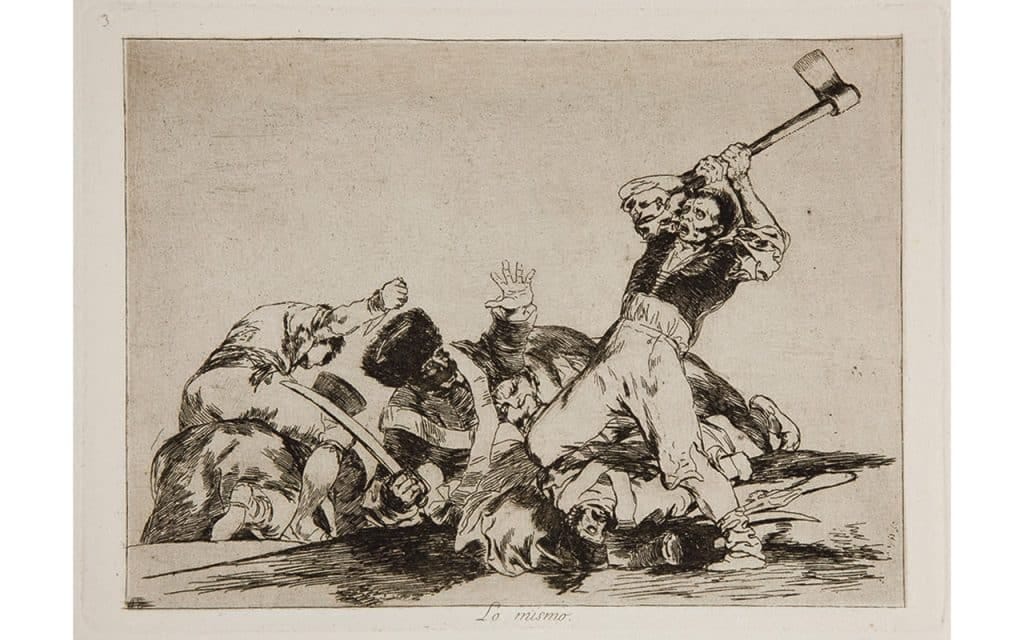
War did end. But nothing was ever peaceful after that.
Goya soon befell political injustice. And by the time he sought to get himself out of the sticky situation, he was old with deathly hollows he couldn’t forget or rationalize at the back of his mind. His recourse was some solitude- to buy himself a farmhouse in the outskirts of Madrid called the Quinta del Sordo or (The House of the Deaf Man).
The only way to express himself was to paint his nightmares on the walls of his house. Paintings like Saturn devouring his son, two men battering each other while sinking into the earth and a dog’s head sloping down a brown vale were products of this troubled time. His favorite dinner place was the one beneath Saturn.
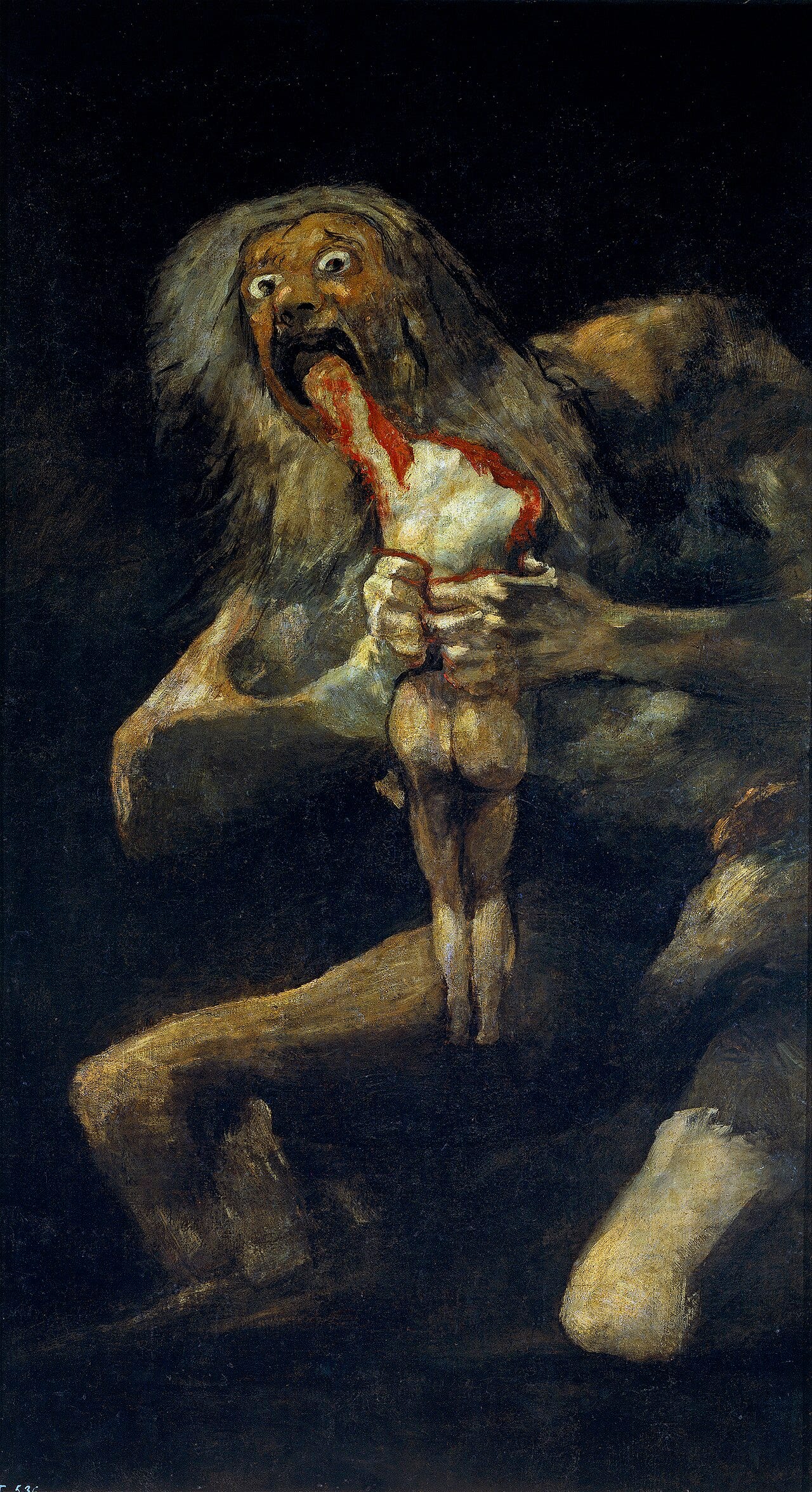
It’s easy to run to the conclusion that Goya was consumed by the darkness he spent most of his life witnessing. But nothing could be further from the truth. Art was his salvation. He drew, painted portraits, and planned his work- daily.
Unfortunately, another political uprising arose. New danger arrived and in 1824 he saw it fit to leave the country at 78 and move to Bordeaux. He left the haunted house and left everything that mattered to him in there- even the paintings that have now become famous. What a tragedy for a deaf and elderly man!
Many people would have wished for death at this point. Given his work, he had earned it. He had lived. But this man defied the odds. He began learning lithography. And after some years of practice he drew an elderly man moving on two sticks, and underneath he wrote- Aún aprendo. I’m still learning.
At every moment, despite what he suffered in his head- he always chose his way forward, never letting the darkness be an excuse not to live, make something of himself.
I fell into the trap of thinking recovery was this thing where something painful happens, you get why it happened and empathize with the people who made it happen- you talk about it with someone and somehow things get back to how they were, you get back to being the same person you were.
But as we know in surgical practice, any wound you encounter never leaves the skin as before. It granulates, new skin forms around it, may become tender at times, but we still consider it healed. Our minds are the same.
You could be having the time of your life and then a sudden wave of loneliness, sadness or the pain of rejection hits you and you’re back to where you started. You might even get frustrated, thinking you haven’t made any progress. Thinking that the philosophy doesn’t work. And that’s why Marcus Aurelius always reminded himself that Stoicism had to be a practice because when we get punched in the face by life, we won’t suddenly become disciplined and composed- we’ll fall back to our baseline habits.
That’s why the best question to ask ourselves at all times is, How can I equip myself to live with this at any given moment?
create a supportive lyfestyle
No one knew how to live with suffering like William Cowper.
He could break apart often due to psychological distress. Even got into periods where he didn’t want to get on with any of it. The he’d endure, it’d pass and he’d find a way into ordinary life again.
He could have fallen into the illusion that he was finally ok. But he knew better. The darkness would return.
Mary Unwin, his widowed friend, knew his ups and downs well enough to stay with him when life became grey again. She cared for him. They settled in Olney where they practiced gardening, built a greenhouse and he wrote beautiful letters in it during summer. He even domesticated 3 hares he called Puss, Tiney, and Bess who humored him with their personalitites.
As expected, he got the blues again, but the garden was still there- he had built a practice around it, feeding the animals and Mary helped him push through. He was never a lone. Cowper did even get into writing, basing his magnus opus, The Task, on the ordinariness of life- like writing a poem about the sofa in his parlor.
The depressive episode ended and returned again. That’s how he lived.
There was never a secret code guaranteeing he’d never suffer again. But he was wise enough to cultivate stable ground on which to perch upon. That’s why its prudent to base our lives off the bad months, when we rarely feel like ourselves.
We ought to commit to the minimum of manageable responsibilities like- making breakfast, a short run, watering plants- do work that energizes us, keep fun and good friends around us, and adjust our activities to our energy levels. This way, our lives do not spiral at the behest of storms of broken relationships, crazy work pressure, sleep deprivation and painful memories. It’s good if our lives become a source of refuge- not strain us further.
With this structure in place, then we’ll have enough mind-space to practice what Epictetus taught us, about examining the thoughts and impressions we get before surrendering to them which helps us manage trauma when old fears, childhood conclusions and rejections try to paint monsters from harmless incidences in our moment to moment lives. This way your mind gets strong and trustworthy enough to steer you back to the shore.
A bit of self-promo before we continue- I’m in the final stages of editing The Stoic Manual: Meditations on the Art of Living, a collection of 150 practical Stoic meditations covering many problems we deal with in our modern lives. It’ll be released soon and included free for all Annual and Lifetime paid members. Meanwhile, access my other books here.
reduce your commitments
Charles Darwin often became sick in his 30s, making travel, crowds, long social activities and his work almost impossible. He persisted but life became increasingly unbearable. And in 1842 he had had enough and decided to move, together with his family, to Down House in Kent countryside. Here, he’d be free from the overstimulation of his social life now that he had become famous. He made a short gravel path called the Sandwalk where he’d walk repeatedly while pondering his ideas. And he protected his office hours with intermissions of much needed rest.
But there was another problem. He had chosen an ambitious project. He was curious to understand how species evolved across generations and this needed several years of observation, correspondence, analysis, reading, writing and revision. Perhaps it was good that he was free from the exciting limelight.
He created a stable routine around his constraints and preferences while minding his body and he did this for 40 years. 40 years saying no, working on his idea for a few hours, resting and starting again the next day. There’s little glamour about this life but in the end his work changed Biology as we know it.
Safe to say, make your life easier if you need to. There’s no shame. Move to a quiet place. Take up less commitments. Spend less time with people who derail you or disturb your peace. Stop allowing distractions, messages, calls, invitations and emergencies to defeat your aspirations for the day.
Because in as much as ambition has its perks, achievement and attention feel good and status births countless opportunities- you still have to keep up with all of it. People suddenly want something from you, others are envious, you’re less freer, more fearful of losing what you’d rather protect and you might suddenly discover that this isn’t how you’d like to live.
It’s Seneca telling his friend Serenus- who had overcome his inner battle but still felt unfulfilled and deeply unhappy. He felt like an invalid who had recovered from an illness only to continue feeling as if they were feverish. How unsettling! He told Serenus to choose his obligations carefully, finish the work he had chosen meticulously, spend time with his friends and alternate work with a worthy solitude- reading & practicing philosophy. When life felt uneasy, he’d return to this practice. This was what the Stoics called euthymia- or being able to be in good terms with ourselves, the goal being so that nothing could affect us more than was necessary.
surround yourself with people who understand
It’s not rocket science that in 1917, after the war, British officers found it difficult to sleep, some got tremors and terrible anxiety, while others experienced constant nightmares. Brave men who had endured the trenches, artillery and faced near-death found themselves incapable of ordinary life.
People would say the soldiers were weak. But the psychiatrist W. H. R. Rivers thought different. He listened to them and advised them not to suppress what happened or what they felt but instead to speak about it, write about it and understand the connection between what happened and how they were living at the moment.
One day, another officer, Siegfried Sassoon, who had survived combat and won the military cross got sent to Craiglockhart, the post-war hospital. That’s where he met Wilfred Owen who was psychologically wounded and had found solace in writing poetry about the war. Sassoon read his work and encouraged him to continue writing.
They related to each other on a deeper level about the experiences of war that nobody other than those who had served would understand. Neither of them would need further explanation on why a sound, dream, memory or words in a conversation would bring war back into a room.
But one day war broke out again and Owen had to go fight.
Unfortunately he was killed in France just before the Armistice. Sassoon survived and he had to live with the trauma for another 50 years. He wrote about it all, read books, spent time in the garden and village cricket in Wiltshire. The traumatic life of the trenches still haunted him, but he found a way to live despite them.
That’s why surrounding ourselves with people who’ve had similar experiences to us can be life-changing. You don’t have to keep explaining yourself or why you feel what you feel. Therapy also serves a related purpose, giving you a stage to analyze, question and reorganize what your mind learned during danger.
I want us to build and see more life from the despair we find ourselves in. To find solace in nature, art and restore adequate proportion in our problems. I want us to stop giving in to outrage, disappointing news we don’t have control over and give up rotting our brains with social media. Of course this will take time. But that’s the way.
P.S: This is my work on relationships, touching issues closest to us, and how to navigate their ups and downs from a Stoic perspective,


The How to Live Long-Term With point is stronger than the usual version of this argument because it gives readers something to test.