
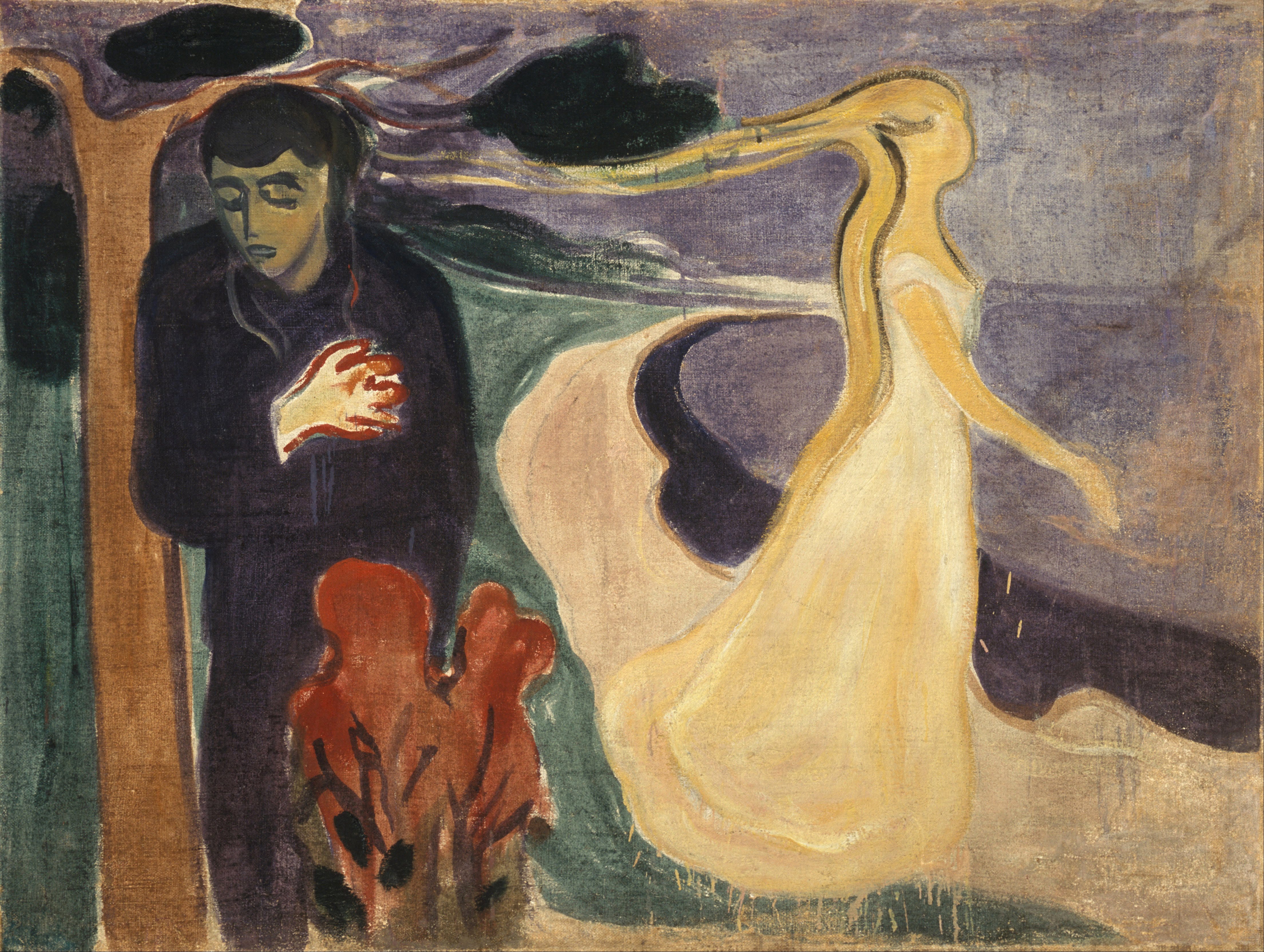
Emotions as Dreams
How to See Your Worst Moments as a Dream- and Wake Up Free
“Clear your mind and get a hold on yourself and, as when awakened from sleep and realizing it was only a bad dream upsetting you, wake up and see that what’s there is just like those dreams.” - Marcus Aurelius
My sister called on a Tuesday afternoon in October, and in the eleven seconds it took her to say the word cancer, the room became a different room. Same walls, same window, same gray afternoon light- but everything had tilted one degree off-axis, the way a painting hung slightly crooked makes an entire wall feel wrong. She told me later that the whole ordeal felt like watching her own life on a screen- the hospital gown slipping off her shoulder, the doctor’s pen scratching a clipboard, the fluorescent buzz overhead. She was there, and yet she wasn’t. Audience and protagonist simultaneously, trapped inside a story she wasn’t aware she was starring in.
Years later, standing in the wreckage of a different devastation, I recognized it again. A relationship had ended, badly and suddenly, the way a bone breaks- how pain glows slowly, then all at once. I’d lie awake at three in the morning projecting myself into some imagined future- six months, a year, five years- and see clearly, from that rational distance, that I would survive. I could almost feel my future self shaking his head at how wrecked I was. But that foreknowledge was useless. I still had to inhabit the present tense. I still had to make coffee and answer emails and carry the grief around like something heavy in my coat.
This is the dirty secret about emotional pain no self-help book says plainly- understanding it doesn’t absolve it. You can know, with full intellectual certainty, that the thing destroying you is temporary- and still be destroyed by it. Insight is not immunity.
So I started to experiment. Not with denial- which is grief in a clown’s mask- and not with suppression- which is grief building pressure in a sealed container. But with something stranger, more like a controlled hallucination. I started treating my worst experiences the way you treat a nightmare you’re aware of while still inside it- real enough to navigate, but not real enough to define or overpower you.
The idea has ancient roots. Marcus Aurelius ran the most powerful empire on earth while losing children, fighting chronic illness, and commanding armies at the front- and wrote philosophy in a tent at night. He kept returning to one discipline- examining your impressions. When something terrible crashed into his life, he’d pause before responding- before letting it become real- and ask, what is this, actually? Not what does it feel like. What is it? Strip the story away. Separate the raw event from the meaning you’re already wrapping around it. He wrote, to himself, in notes he never intended anyone to read: “You have power over your mind, not outside events. Realize this, and you will find strength.” This was how he wrote to survive.
The Stoics understood what neuroscience has since confirmed- the feeling of emergency arrives before the thought does. When you read a message that devastates you- your phone lighting up at midnight, words rearranging into something unbearable- your limbic system has already flooded your body with cortisol and adrenaline before your prefrontal cortex finishes reading the sentence. Your heart pounds before your brain decides whether to be afraid. The body stages its rebellion first. The mind arrives afterward, finds the damage done, and does what minds do- builds a story to explain the wreckage. That story is almost always more catastrophic than the wreckage itself.
Think of the last nightmare that woke you sweating. Your fear was entirely rational within the grammar of the dream. The logic was airtight. The threat was imminent. Then you opened your eyes, and the architecture of terror dissolved- not because you reasoned your way out, but because you crossed the membrane between sleep and waking and a different set of rules applied. The monster was still vivid; it just no longer had jurisdiction over you.
Strong emotions work the same way. They are total environments. They have their own physics, their own lighting, their own rules about what’s possible and what’s inevitable. Grief makes permanence feel impossible. Shame makes escape feel impossible. Rage makes patience feel impossible. Inside the dream, the dream’s logic is sovereign. The work- the resounding, difficult, genuinely radical work- is to remember you’re dreaming.
Shakespeare knew this. The tragedy of Othello isn’t that Iago is diabolically clever, though he is. It’s that Othello’s jealousy creates its own evidence. Once the emotion takes hold, everything confirms it: Desdemona’s manner, her words, her silences, her innocence. The emotion becomes a lens that bends the world to fit it. Othello doesn’t lack intelligence. He lacks the one capacity that could save him- the ability to step outside his own conviction long enough to ask whether it’s a dream he’s believed too completely.
I’ve tested this before a 72-hour shift- where you already know, standing at the entrance on hour one, that around hour forty you’ll become a version of yourself you don’t recognize- slow, clumsy, sharp-tongued, capable of crying at a commercial. The dread of that transformation is its own suffering. Your mind, anticipating misery, begins it early, as a preview.
So I usually try something different. I stand at the threshold and name what’s coming. I say to myself- this is a bad dream I’m choosing to walk into. It’s extremely real, it’ll hurt, there will be moments that feel unbearable. But I’ve had bad dreams before. I’ve survived every one. The dream always ends. Morning always comes. Knowing the dream ends doesn’t mean you sleepwalk through it- I can be fully, even courageously present inside it, because the present moment is no longer mistaken for eternity.
The result pleasantly surprises me. It’s because I stopped adding to the difficulty. I stopped the second layer of suffering we always stack on top of the first- the suffering about the suffering, the anxiety about the anxiety, the desperate wish that what is happening were not happening. That second layer is where most of us actually live. And it’s entirely optional.
The Buddhist teacher Pema Chödrön calls this the difference between pain and suffering. Pain is what happens to you. Suffering is the story you construct around it- the walls you build from it, the identity you cement. The pain of a difficult experience is often unavoidable. The suffering is a choice, made in small increments, each time you decide the dream is more real than you are.
Viktor Frankl survived three years in Nazi concentration camps, including Auschwitz, and wrote afterward that the last of human freedoms- the one no external force can take- is the freedom to choose your attitude toward your circumstances. Frankl wasn’t pretending the camps weren’t happening. He did something harder and stranger- he maintained a self larger than his circumstances. He was the dreamer who remembered he was dreaming, even inside the worst dream imaginable.
There is a Japanese concept called ma- the meaningful pause, the space between notes that makes music possible rather than just noise. In the moment before you respond to the thing that has devastated you, there is a ma. A gap. A sliver of space between stimulus and reaction where your full humanity lives. The Stoics called it the moment of assent- the instant when an impression demands your signature, and you can choose whether to sign. Most of us don’t know the gap exists. We receive the impression and produce the reaction, automatic as a reflex. Emotional sovereignty is the practice of finding that gap and learning to live inside it, even for a bit.
Picture this. It’s 11:42 PM. You’re reading something on your phone in a dark room, and the words are doing what words sometimes do- reaching through the screen and closing a fist around your chest. Your breathing goes shallow. Your mind races several steps ahead, painting catastrophic murals of what this means, what comes next, what you’ll lose. The future feels sealed. The feeling feels like fact.
Here is what’s actually true- you’re inside a dream. Yes, the pain is real, the circumstances are real, the thing that happened happened. But the meaning you’re assigning to it in this dark hour, in the particular neurological storm your body stages in response to threat- that meaning is provisional. It’s the dream’s logic, not the universe’s verdict. The universe doesn’t hand down verdicts at midnight. Trust me, you’re not that special. It just keeps moving.
I don’t want you to think of this as toughness. Toughness merely keeps things out, and it keeps you in- which is a form of cowardice. What we’re talking about is permeability- letting the thing move through you rather than building a fortress around it and calling the fortress yourself. Cute. What you do is acknowledge the surge. You let it speak. You say, with compassion for yourself- I see you. I know where you come from. I know you feel colossal. And you’re not the last word.
Then you just watch it all as it unfolds- your actions included. You can feel the full force of jealousy without acting from it. You can feel grief without becoming it. You can feel rage rise and choose, in the gap, to let it crest and fall without carrying it anywhere you’ll regret.
The freedom this practice offers is warmer than what most people think about detachment. When you stop being a hostage to your own emotional patterns, good things happens- you become more present, not less. You can be genuinely moved without being swept away. You can love fiercely without clinging. You can face terrifying uncertainty without the added weight of panic about the panic. The dream becomes something you inhabit with grace- fully engaged, fully feeling, even excited but no longer confused about who’s running the show. You can have the balls to say, “It’s just pain,” “It’s just fatigue.” And move on with your life.
My sister finished her treatment. She’s fine now- fine in the complicated, deeper way that people who have faced something real become fine. She told me recently that the strangest gift of the whole experience was learning to live inside uncertainty without demanding it resolve itself.
She woke up. That’s the whole thing. That’s the whole practice, the whole philosophy, the whole point.
The dream always ends. The question is whether you’ll be awake enough to notice morning when it comes.
Join 99,000 other Stoics,
P.S: Annual & Patron members get all my books with their subscription. The bundle includes, ‘The Best of Marcus Aurelius’, ‘The Tools’, with over 40,000 words of bonus content + a free copy of ‘The Stoic Manual Vol. 1’ dropping September next year. Patron members also get Lifetime Access to the publication with a one-time fee, all bonuses, and all future benefits- at no extra cost. Featured,
P.P.S: Most people loved the series on How to Deepen Your Friendships, Part I, Part II & Part III. Also check out the practical entries on How To Deal With Toxic People, How to Process & Overcome Grief & How to Prevent and Overcome Burnout. Happy reading!
Did you like this entry? Tell me about it.
I always enjoy hearing from you, and for you to hear from each other.
Please leave a like (❤️), tell me what you think (💬) in the comment section and share this post with someone so that more people can discover and benefit from it.
Support The Stoic Manual and access 280+ premium in-depth essays: lessons & mini-courses in the art of living, consolations for difficult times, Relationship Mini-courses, The Wealth Playbook, Leadership Skills, Social Skills and Health Tools for a virile and distinguished life.


Auguries of Anguish: https://tritorch.substack.com/p/auguries-of-anguish