


Welcome, dear reader! See, as we grow older, our responsibilities increase, and it becomes easier to spend our lives working, solving problems, and taking care of everyone except ourselves. But adulthood should be more enjoyable. We shouldn’t be feeling tired all the time. The Stoics understood that living well requires us to develop habits that make us more capable of handling life’s demands while leaving room for its pleasures. Here are ten habits that can help you do both. If you missed the last edition on How to Love Without Losing Yourself, you can catch up right here.
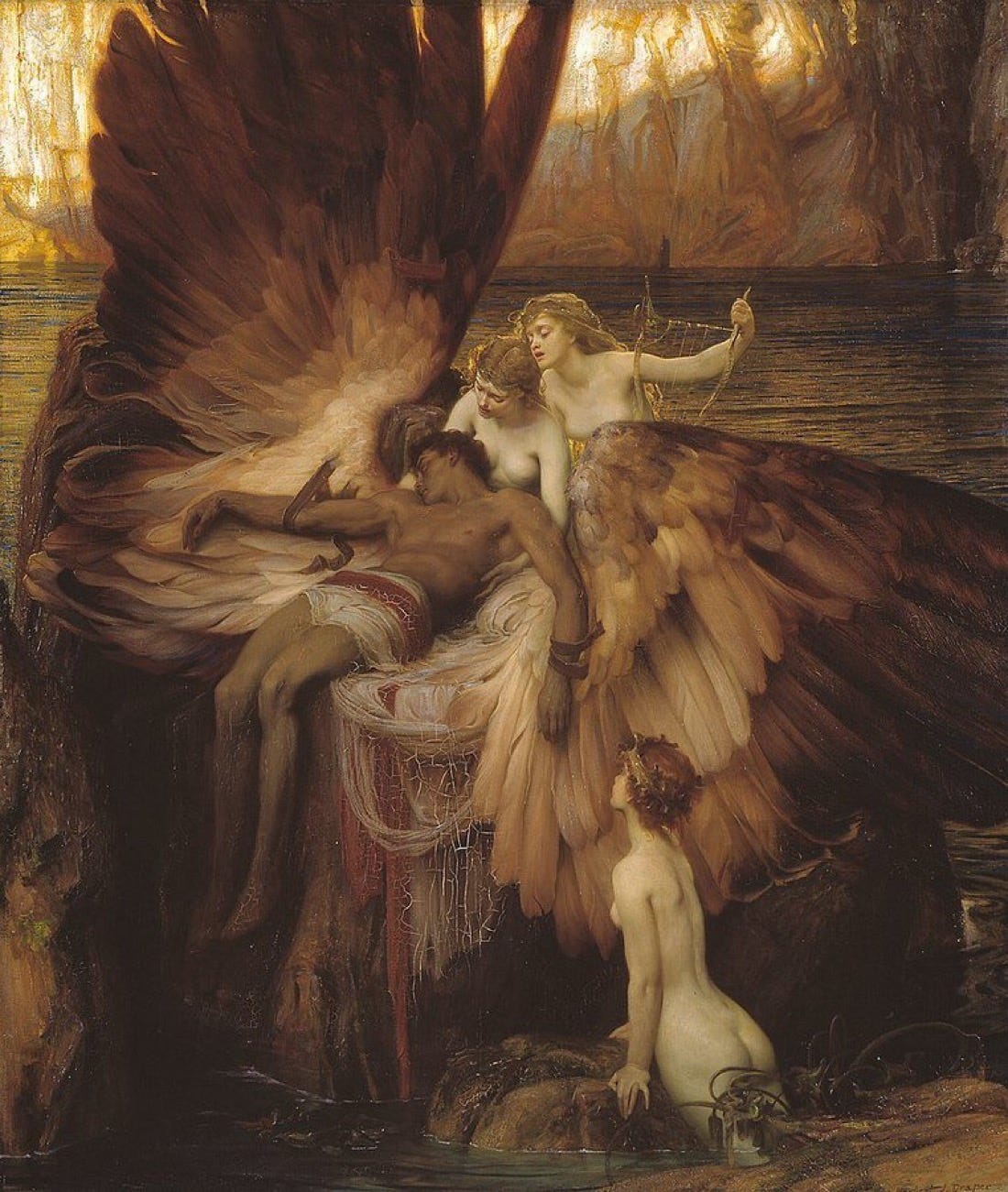
Most people say adulthood is a scam. I get why. You thought you’d be freer but there’s always work to do, money is never enough, you got people to care for, relationships to maintain, and a growing list of errands that never seems to end.
So we work harder, sacrifice our pleasures, neglect our health, and promise ourselves that we’ll enjoy life when things become easier.
But the funny thing is, the very activities we sacrifice are often the ones that give us the energy to handle everything else.
We forget that the whole point of earning a living is to have a life worth living.
Life is inherently hard. We can’t do much about that. But we can decide how we’ll respond to its demands, how we’ll organize our days, and what kind of people we’ll become in the process. There’s a way of living that makes even difficult periods feel worthwhile, where our work, relationships, health, and pleasures support one another.
These ten habits can help us get there.
1. give your days some structure
Seneca observed that people will defend their property fiercely, yet allow others to take up their time without much resistance. They’ll spend hours attending to matters that don’t concern them, fulfilling obligations they never wanted, or following whatever happens to demand their attention.
Then, at the end of the day, they’ll complain that life is too short. That the day is too short.
The problem, Seneca argued in On the Shortness of Life, is often how we use the time available to us.
I’ve found that having a schedule and a running to-do list makes life much easier to manage. When you plan what you want to accomplish within a given day, you have something to follow through on, and something against which you can measure your progress.
You can also look back over a week or month and see where your time went. What was useful? What took longer than necessary? What kept you from doing the things you wanted?
This prevents our days from becoming a series of reactions where we wake up, answer messages, attend to other people’s priorities, and suddenly it’s evening. It’s not wise to live like that.
Of course, life will interrupt our plans. Some days will turn out nothing like we expected. But having a plan gives us somewhere to return when that happens.
And there’s another advantage. Once we make room for exercise, reading, friends, and rest in our schedules, we no longer have to depend on having time left over after everything else is done.
We can begin giving these parts of life the attention they deserve.
2. cultivate a strong body
In my first year of medical school, I was having trouble enduring the long hours of concentration that studying demanded.
There was always more to read, another presentation to give, another examination to prepare for. And I knew that if I couldn’t sustain my attention, the years ahead would become increasingly difficult.
I’d read somewhere that exercise could help improve attention through its effects on the brain, so I decided to give it a try.
What surprised me was how much else began to change.
As my physical endurance improved, I could study for longer periods. Exercise taught me to delay gratification, manage my time, and begin my reading early enough for the knowledge to accumulate over the academic year. And by the time clinical examinations came around, these small advantages had become useful.
I still find that a combination of strength training and running at least three times a week makes an enormous difference in how I feel, think, and work.
And the principle extends beyond exercise.
When you become accustomed to running, walking feels easier. When you learn to run faster, the pace that once exhausted you becomes more manageable. When you practice reading difficult books, less demanding material becomes easier to understand. This discipline seeps everywhere.
The Stoic Cato the Younger deliberately exposed himself to physical hardship. Plutarch describes him walking in difficult weather and training his body to endure discomfort. He understood that the ability to bear hardship could be developed through practice.
We needn’t imitate all his extremes. But I want you to know there’s infinite value in making ourselves more capable than our ordinary circumstances require.
Then, when life becomes demanding, we have something in reserve.
And we ought to support this training with nourishing food, adequate sleep, and proper recovery. Because a body that we neglect will eventually begin to limit what we can accomplish. Or give us more problems than we’d like.
3. read good books
For a long time, I had a love-hate relationship with books.
School hadn’t helped. Reading and writing were usually things we did to earn a grade, please a teacher, or complete an assignment. There was little room for self-discovery or the pleasure of expressing one’s creativity.
So I didn’t always appreciate what books could offer.
That changed when I experienced a personal failure and found myself lost. I could have spent my time brooding over what had happened, but I wanted to find another way to think and live. I began reading in search of something that could help me understand my circumstances and what I ought to do next.
And I found much more than I expected.
Reading introduced me to people who had endured difficulties greater than mine, pursued ambitious goals, made terrible mistakes, and discovered ways of living that I hadn’t considered.
Some of their ideas were immediately useful. Others took years to understand.
I’ve since found that whenever I go deep into something worth studying, I almost always come away with ideas that improve my life, work, health, or relationships.
This is why I willingly invest time and money in good books, courses, and other resources. The return can be enormous, particularly because knowledge compounds. What you learn today helps you recognize and understand things that would have escaped you yesterday.
But the greatest pleasure is discovering that we can continue to grow throughout our lives.
We needn’t remain the people our circumstances, education, or earlier mistakes made us.
And sometimes a single good book or article introduces a possibility we never knew existed.
4. stop resisting what happens
One of the things that made life unnecessarily difficult for me was resisting change.
When something went wrong, or I found myself under pressure, I sometimes spent more energy wishing the circumstances were different than dealing with what was in front of me.
And naturally, this made difficult situations feel even worse.
Over time, I began developing a different attitude. Whenever I encountered something demanding, I would remind myself that the experience could be good for me. It could make me stronger, faster, smarter, or better equipped to handle something else in the future.
That didn’t mean I enjoyed every difficult moment. But it gave me a reason to lean into the work rather than avoid it.
Some of the toughest periods of my life have consequently led to transformations that turned out better than I could have imagined.
Epictetus offers a related lesson in the Enchiridion- we ought to learn to work with events as they happen rather than continually demanding that they conform to our wishes.
This doesn’t mean we should tolerate every injustice or abandon our ambitions.
It means recognizing that once something has happened, no amount of complaining can undo it. In fact, whining just makes things harder. We still have to decide what comes next.
And that decision is often what determines whether a difficult experience becomes another source of suffering or an opportunity to improve our circumstances. An opportunity to learn.
We can lose days, months, and sometimes years wishing life had taken another course.
Imagine what we could accomplish if we devoted even half that energy to making something useful out of the life we have, however unseemly it might be.
5. deal with problems while they’re still small
Few things exhaust us as much as the responsibilities we keep putting off.
A difficult conversation we know we need to have. A financial problem we don’t want to examine. An unfinished assignment. A medical concern we hope will resolve on its own.
We avoid these things because attending to them feels unpleasant. Yet the problem remains, and often becomes more demanding with time.
A misunderstanding turns into resentment. A neglected bill becomes a larger expense. Work that might have taken an afternoon now requires an entire weekend.
And even when we’re doing something else, we know the problem is waiting for us.
I’ve found it useful to approach even the areas of life that don’t interest me with the same seriousness I give to those I enjoy.
The idea that helped me was simple- how I do one thing is how I do everything.
Not because every task deserves equal attention, but because the way we repeatedly respond to responsibility gradually becomes our character.
If we avoid things because they’re boring or uncomfortable, we train ourselves to retreat whenever life becomes demanding.
On the other hand, when we learn to follow through, especially when we don’t feel like it, many ordinary difficulties become easier to manage and we benefit more for it.
This applies to relationships as well. It’s usually better to have an uncomfortable conversation while both people are still willing to listen than to wait until resentment has made kindness difficult.
We will never reach a point where every responsibility is pleasant.
But we can become the sort of person who no longer needs everything to be pleasant before taking action.
6. learn to disappoint people
As we grow older, people begin expecting more from us.
They want our time, attention, agreement, assistance, and sometimes our participation in matters that have little to do with the life we’re trying to build.
Some of these demands are reasonable. We have responsibilities to our families, friends, colleagues, and communities.
But we can easily end up taking responsibility for things that were never ours to manage.
We say yes because we don’t want to offend someone. We become involved in disagreements that don’t concern us. We try to change people who have shown little interest in changing themselves.
And because our time is limited, every unnecessary commitment takes something away from the responsibilities, experiences and relationships that matter more.
Epictetus reminds us that other people’s judgments, desires, and decisions ultimately belong to them.
We can advise someone, tell them the truth, offer assistance, and make our concerns known. But we can’t live their lives for them.
Nor can we arrange our own lives so that nobody will ever be disappointed with us.
There will be times when a friend wants more of our company than we can give, when a colleague asks for help we cannot provide, or when someone we love disagrees with a decision we’ve made.
We ought to treat them with kindness and fairness.
But kindness doesn’t require us to abandon our own responsibilities, and love doesn’t give us authority over another person’s choices.
Once we accept this, our relationships can become much more enjoyable. We can give people our attention willingly, without allowing obligation and resentment to consume the pleasure of knowing them.
7. make time for the people you love
One of the peculiar things about adulthood is that we can become so occupied with providing for the people we love that we have little time left to enjoy their company.
We tell ourselves we’re building a better future for our families. So we work longer hours, take on more responsibilities, and postpone the gatherings we used to look forward to.
But what exactly are we working toward if we have nobody with whom to enjoy the life we’re building?
I’ve found that setting aside time to party with friends, have cookouts, go on hikes, and simply spend time together outside work makes life considerably better.
We are social beings. We need friendship, affection, laughter, and the pleasure of belonging somewhere.
Aristotle went so far as to argue that no one would choose to possess every other good in life without friends to share it with.
And there’s something equally beautiful about having someone you love waiting for you at home.
Someone whose company makes ordinary evenings enjoyable, with whom you can build a life, share your ambitions, and face the difficult periods that inevitably come.
Because there will be moments when life feels overwhelming. There will also be moments when everything seems to be going wonderfully, and you’ll wish there was someone beside you to celebrate and indulge in what you’ve accomplished.
Of course, good relationships require attention. We have to make time for people, keep our promises, show up when they need us, and sometimes sacrifice our convenience for their happiness- for their big moments.
But these obligations can become among the most pleasurable parts of life.
They give our efforts meaning beyond ourselves.
8. learn to enjoy your own company
Yes, our relationships matter, but we also need to become comfortable spending time alone.
It’s exhausting to continually need entertainment, conversation, or some other form of stimulation to feel at ease.
We finish work and immediately reach for our phones. We sit down to rest and begin looking for something to watch. Even a few minutes without an activity makes us restless.
Eventually, we become so accustomed to being occupied that we forget how to enjoy our own company.
Meditation has been particularly useful to me in this regard.
I’ve found that after spending some time with my own thoughts, I usually feel happier, more appreciative of life, and better able to concentrate on whatever I want to accomplish next.
It also gives me the opportunity to examine how I’ve been living.
Am I spending my time on things that matter? Have I been reacting poorly to something? Is there an unresolved issue I need to address? Have I become so occupied with what I want next that I’ve stopped appreciating what I already have?
The Stoics placed enormous importance on this kind of examination.
Marcus Aurelius wrote much of what we now know as his Meditations as reflections addressed to himself. Even while governing an empire, he returned to questions about his judgments, responsibilities, conduct, and the proper use of his life.
We can benefit from doing something similar.
Sometimes the most useful thing we can do is sit alone for a while, without trying to accomplish anything, and give ourselves the opportunity to reflect, like we do over at The Stoa.
And sometimes we don’t even need to think about anything important. We can simply enjoy being alive while watching a sunset.
9. make room for what you love
One of the greatest mistakes adults make is assuming that spending energy outside work will leave them with less energy for their responsibilities.
So they stop reading for pleasure, exploring nature, dancing, visiting friends, learning new things, or pursuing interests that have nothing to do with earning money.
They become increasingly efficient at working and worse at enjoying life.
And then they wonder why their days feel so monotonous. So constipated with ennui.
The English designer and writer William Morris spent much of his life questioning the separation between useful work and human enjoyment.
In News from Nowhere, he imagined a society where people could take pleasure in making beautiful things, working with their hands, spending time outdoors, and participating in the their communities.
His vision may have been utopian, but the question behind it is still poignant- why should so much of our lives be organized around activities that leave so little room for pleasure?
Of course, we have to earn a living. There are bills to pay and people who depend on us.
But we also have a responsibility to make something worthwhile out of the time available to us.
A good book can introduce us to an entirely different world. A hike can remind us how much beauty exists beyond our daily concerns. Dancing, music, art, and good conversation can make an ordinary weekend something we remember for years.
And these pleasures often make us more willing to return to our work.
We come back with greater enthusiasm because our lives contain something beyond obligation.
The aim isn’t to fill every free hour with another activity. Sometimes we ought to rest, do nothing, and be content with the simple pleasures already available to us.
There is no prize for being perpetually occupied.
10. work toward a life that gives you more freedom
All these habits can make your life easier. But there’s a larger question we eventually have to answer.
What kind of life are we trying to build?
We can become healthier, more disciplined, more knowledgeable, and better at managing our responsibilities. Yet if the circumstances we’ve created leave us with little freedom to enjoy these advantages, something will always be off.
This is one of the reasons I believe in starting a business and working toward greater independence.
Building something of your own allows you to pursue goals you care about, develop useful skills, and potentially gain more control over how you spend our time.
Of course, entrepreneurship brings its own hardships. There will be uncertainty, financial pressure, difficult decisions, and periods when the work demands more than we expected.
And it’s not the right path for everyone.
But the point remains, regardless of the career we choose- we ought to work toward circumstances that give us greater freedom to live according to our values.
That might mean building a business, becoming exceptionally good at our profession, managing our finances better, or reducing the number of obligations we’ve allowed to accumulate.
It requires sacrifice.
We can’t spend our mornings lounging in bed, waste our afternoons on gossip and trivialities, and then wonder why we have no time for the life we want.
At some point, you have to decide how you intend to live and remain reasonably faithful to that decision.
And this is where most people often misunderstand Stoicism.
They imagine a philosophy solely concerned with hardship, restraint, and learning to tolerate unpleasant circumstances. They forget that its purpose is to help you live well, to develop the wisdom, courage, justice, and temperance that make a flourishing life possible. It’s the engine that’ll help you achieve your goals.
There’s a beautiful art to living this way.
Your abilities improve, relationships deepen, ambitions become more meaningful, and the things that once overwhelmed you become easier to handle. You begin finding pleasure in the effort itself, because you can see the kind of person you’re becoming and the possibilities your work is opening up.
Life will still be difficult. There will be losses, disappointments, periods of uncertainty, and responsibilities you can’t escape.
But as you become better equipped to handle these things, you can begin directing more of your energy toward the extraordinary privilege of being alive.
And that’s what becoming an adult ought to mean, dear - becoming increasingly capable of handling life’s demands while finding more reasons to love and enjoy this finite life.
‘Til next time. Have a good week ahead!
P.S: If we’ve helped or touched you in a way, consider upgrading to a paid subscription. Or support our free essays, writing and research with a one-time donation of your choosing by clicking the button below. Be part of our great cause.
If you already donate, I appreciate you more than you know. You help us make practical philosophy available to people who need it, including those who can’t afford a paid subscription.
With love,
Antonius Veritas, M.D
This makes such wonderful sense.
I suspected you were writing this for me, and when you said 'dear Chris', I knew I was right. Gracias, amigo!